• Home
  • About Us
    • About Us
    • Our Services
    • Our Team
    • Our Vision
    • Portfolio
  • Courses

    About Courses

    • Blog
      • Montessori in the Arab World
        • Montessori Books

    New Course

    How to do finger puppets

    How to do finger puppets

    500
    EGP
    Read More
  • Events
  • Blog
    • Child & Skills
      • Fear & Anxiety
      • Bad Habits
      • sleeping problems
      • School problems
      • Bladder & Bowels
      • Speech & Conversation
      • Behavior problems
      • Attention Difficulties
      • Eating & Weight
      • Unhappy Child
      • unacceptable behavior
      • Bullying
      • Psychiatric Diagnosis
      • Other Problems
      • Kids skills Steps: Getting Started
      • Kids skills Steps: Building skills
      • Kids skills Steps: making it fun
      • Kids skills Steps: reinforcing learned skills
      • True Story
    • Montessori in the Arab World
      • Montessori at home
      • Montessori at school
    • Life Skills
      • Social
        • The Volunteer’s Guide 1: The Essence of Volunteering
        • The Volunteer’s Guide 2: What makes volunteering unique 1
        • The Volunteer’s Guide 2: What makes volunteering unique 2
        • The Volunteer’s Guide 3: Types of volunteering
        • The Volunteer’s Guide 4: How to Get Started?
        • The Volunteer’s Guide 5: Choosing where to volunteer
        • The Volunteer’s Guide 6: Am i Being used?
        • The Volunteer’s Guide 7: what to expect?
        • The Volunteer’s Guide 8: What is expected of me?
        • The Volunteer’s Guide 9: what can i do in Love2Serve4All?
        • International Women’s Day: Empowering Girls Through Education:
        • Youth Empowerment: Fostering Leadership and Initiative
      • Mental
        • Reset
        • Holiday Stress: Your Guide to Managing and Enjoying the Season
        • A Year in Retrospect: Reflection on 2023
        • Navigating the Holidays with Grace: Setting Boundaries for a Joyful Season
        • Embracing Self-Love: A Valentine’s Day Guide
      • Skills
        • The year is ending? How to achieve my goals in the last 4 months
        • How to create a to do list
        • 101 Guide to Crafting a Personal Budget
        • A Vision for the Future: Setting Your Personal Goals for 2024
        • Achieving Your Dreams: A Step-by-Step Guide to Conquering Your Goals in 2024
        • The Power of Journaling: A Beginner’s Guide to Self-Discovery and Personal Growth
      • Health
        • Winter Wellness: Your Guide to Flu and Cold Prevention
    • Kids At Home
      • Movie Night Guide: The sorcerer’s Elephant
      • Reading with your child
      • Navigating Family and Social Gatherings with Kids: Tips to Overcome Challenges
      • Movie Night Guide: “The Christmas Carol”
      • Cooking with Kids: A Recipe for Fun in the Kitchen
      • Ringing in the New Year with Little Ones: A Guide to Celebrating New Year’s Eve with Your Child
      • Love for Learning: Valentine’s Day Special:
    • Kids At School
      • How to help a child develop independent study skills
      • Managing back-to-school anxiety
      • Setting up a back-to-school morning routine for your child
      • Social-Emotional Learning: Nurturing Emotional Intelligence in Students:
      • International Day of Happiness: Cultivating Positive Learning Environments:
  • Shop
    • Books
      • Children’s Books
      • For Children & Parents
      • Montessori Books
      • Parenting & Relationship
      • Self Help
      • Teens & Young Adults
      • Education & Reference
      • Montessori Education
        • Montessori Activities
        • Montessori Books
        • Montessori Materials
      • Educational Programs
      • Schools & Teaching
  • News
  • Features
    • Timetable
    • Gallery
    • Blogs’ Gallery
    • FAQs
    • MY ACCOUNT
  • Contact
  • Register Now
    • Registration
    • Login
Have any question?
(02) 0127 293 5708
info@love2serve4all.org
  • English
    • العربية
Love2Serve4All
  • Home
  • About Us
    • About Us
    • Our Services
    • Our Team
    • Our Vision
    • Portfolio
  • Courses

    About Courses

    • Blog
      • Montessori in the Arab World
        • Montessori Books

    New Course

    How to do finger puppets

    How to do finger puppets

    500
    EGP
    Read More
  • Events
  • Blog
    • Child & Skills
      • Fear & Anxiety
      • Bad Habits
      • sleeping problems
      • School problems
      • Bladder & Bowels
      • Speech & Conversation
      • Behavior problems
      • Attention Difficulties
      • Eating & Weight
      • Unhappy Child
      • unacceptable behavior
      • Bullying
      • Psychiatric Diagnosis
      • Other Problems
      • Kids skills Steps: Getting Started
      • Kids skills Steps: Building skills
      • Kids skills Steps: making it fun
      • Kids skills Steps: reinforcing learned skills
      • True Story
    • Montessori in the Arab World
      • Montessori at home
      • Montessori at school
    • Life Skills
      • Social
        • The Volunteer’s Guide 1: The Essence of Volunteering
        • The Volunteer’s Guide 2: What makes volunteering unique 1
        • The Volunteer’s Guide 2: What makes volunteering unique 2
        • The Volunteer’s Guide 3: Types of volunteering
        • The Volunteer’s Guide 4: How to Get Started?
        • The Volunteer’s Guide 5: Choosing where to volunteer
        • The Volunteer’s Guide 6: Am i Being used?
        • The Volunteer’s Guide 7: what to expect?
        • The Volunteer’s Guide 8: What is expected of me?
        • The Volunteer’s Guide 9: what can i do in Love2Serve4All?
        • International Women’s Day: Empowering Girls Through Education:
        • Youth Empowerment: Fostering Leadership and Initiative
      • Mental
        • Reset
        • Holiday Stress: Your Guide to Managing and Enjoying the Season
        • A Year in Retrospect: Reflection on 2023
        • Navigating the Holidays with Grace: Setting Boundaries for a Joyful Season
        • Embracing Self-Love: A Valentine’s Day Guide
      • Skills
        • The year is ending? How to achieve my goals in the last 4 months
        • How to create a to do list
        • 101 Guide to Crafting a Personal Budget
        • A Vision for the Future: Setting Your Personal Goals for 2024
        • Achieving Your Dreams: A Step-by-Step Guide to Conquering Your Goals in 2024
        • The Power of Journaling: A Beginner’s Guide to Self-Discovery and Personal Growth
      • Health
        • Winter Wellness: Your Guide to Flu and Cold Prevention
    • Kids At Home
      • Movie Night Guide: The sorcerer’s Elephant
      • Reading with your child
      • Navigating Family and Social Gatherings with Kids: Tips to Overcome Challenges
      • Movie Night Guide: “The Christmas Carol”
      • Cooking with Kids: A Recipe for Fun in the Kitchen
      • Ringing in the New Year with Little Ones: A Guide to Celebrating New Year’s Eve with Your Child
      • Love for Learning: Valentine’s Day Special:
    • Kids At School
      • How to help a child develop independent study skills
      • Managing back-to-school anxiety
      • Setting up a back-to-school morning routine for your child
      • Social-Emotional Learning: Nurturing Emotional Intelligence in Students:
      • International Day of Happiness: Cultivating Positive Learning Environments:
  • Shop
    • Books
      • Children’s Books
      • For Children & Parents
      • Montessori Books
      • Parenting & Relationship
      • Self Help
      • Teens & Young Adults
      • Education & Reference
      • Montessori Education
        • Montessori Activities
        • Montessori Books
        • Montessori Materials
      • Educational Programs
      • Schools & Teaching
  • News
  • Features
    • Timetable
    • Gallery
    • Blogs’ Gallery
    • FAQs
    • MY ACCOUNT
  • Contact
  • Register Now
    • Registration
    • Login

Blog

Home » Blog » The Life of Maria Montessori

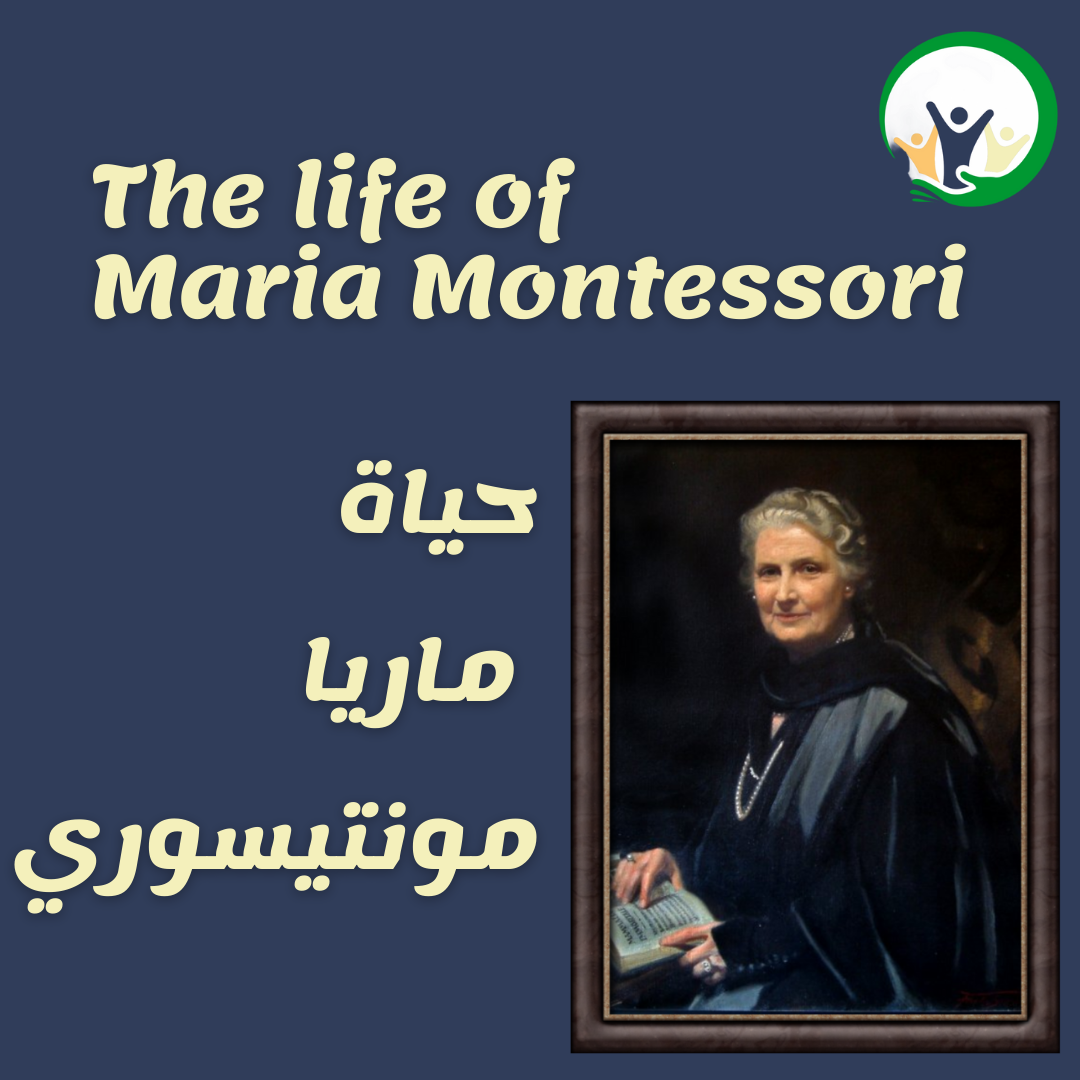
The Life of Maria Montessori
  • Posted by Zohor Bernaba
  • Categories Blog, Montessori in the Arab World
  • Date October 15, 2020
  • Comments 0 comment
The Life of Maria Montessori

Maria Montessori is born on the 31st August 1870 in the town of Chiaravalle, Italy. Her father, Alessandro, is an accountant in the civil service, and her mother, Renilde Stoppani, is well educated and has a passion for reading. She is the only child in the family.

In 1875 the family moves to Rome, where Maria is able to get good education and special for her time, she wants to become an engineer, which is very unusual for a female at that time. After her graduation she changes her career. Her parents encourage her to become a teacher and Maria decides to study medicines. After quite some opposition she becomes the first woman in Italy to take the degree of Doctor of Medicine and joins the staff of the universities Psychiatric Clinic, which is related to retarded children.

Montessori is not just different because of her gender, but because she is following her heart and reaches her goals through persevering. On the of 10th July 1896 she becomes one of the first female doctors in Italy, and with this distinction also becomes known across the country.

She immediately starts working in the San Giovanni Hospital attached to the University. In the same year she is asked to represent Italy at the International Congress for Women’s Rights in Berlin, and in her speech to the Congress she develops a thesis for social reform, arguing that women should be entitled to equal wages with men. When journalist askes her how her patients responds to a female doctor, she replies, “… they know intuitively when someone really cares about them.… It is only the upper classes that have a prejudice against women leading a useful existence.”

From 1896 Maria continues her career in hospitals and much of her work was with the poor, and particularly with their children. As a doctor she is remarked for the way in which she feels with her patients. She always is making sure that they are warm and properly fed as well as being diagnosed and treated well for their illnesses. In 1897 she volunteers to join a research programme at the psychiatric clinic of the University of Rome.

A part of her work is working in Rome’s asylums for the insane and seeking patients for treatment at the clinic. On one of her visits, a childcarer of the  asylum tells her with dislike how the children grab crumbs off the floor after their meal. Montessori realises that in such a bare, unfurnished room the children are desperate for sensorial stimulation and activities for their hands, and that this deprivation is contributing to their condition.

Maria starts to search for all available information about children with profound intellectual disabilities. She studies the revolutionary work of two early 19th century Frenchmen, Jean-Marc Itard, who becomes known because of his work with the ‘wild boy of Aveyron’, and Edouard Séguin, his student. She is so eager  to understand their work properly that she translates it herself from French into Italian. Itard has developed a way of teaching through the senses.  Séguin later tries to adapt this concept to mainstream education and emphasises respect and understanding for each individual child. He also creates materials and tools to help develop the child’s sensory perceptions and motor skills, which Montessori later uses in new ways

During 1897-98 she expands her knowledge of education by attending courses in pedagogy, studying the works of Rousseau, Pestalozzi and Froebel.

Maria develops and spreads her vision for the importance of suitable education for children. She starts working as a director with the children in the State Orthopedic School. For two years she teaches in the school(s) all day from 8.00 AM to 7.00 PM and works long into the night preparing new materials, making notes  from her observations, and reflecting on her work. To her amazement, she finds that profound intellectual disabled children can learn many things, that always has seemed to be impossible. This experience arouses her interest to see how these exercises would affect ‘normal’ children and how their development would become more  a natural development.

During the same years a relationship with Giusseppe Montesano, a collegue,  has developed into a love affair, and in 1898 Maria gives birth to a child, a boy named Mario, who is given into the care of a family who lives in the countryside near Rome. Maria visits Mario often, but it is not until he is older that he comes to know that Maria is his mother. A strong bond is nevertheless created, and in later years he collaborates and travels with his mother, finally continuing her work after her death.

In 1901 Maria Montessori leaves the Orthophrenic School and immerses herself in her own studies of educational philosophy and anthropology.

From 1904-1908 she becomes also a lecturer at the Pedagogic School of the University of Rome. In one lecture she tells her students: “The subject of our study is humanity; our purpose is to become teachers. Now, what really makes a teacher is love for the human child; for it is love that transforms the social duty of the educator into the higher consciousness of a mission”[2].

In 1907 the above experiences moves  Maria to establish the first ‘Children’s House’ (Casa dei Bambini) in the slums of Rome. These children are all young, between three and seven years old  from poor families.  These children of illiterate parents are frightened and very shy. It is almost impossible to get them to speak.  Their faces are expressionless and they look as if they never have seen anything in their lives. They are indeed poor in mind, abandoned in spirit !

Dr. Montessori watches the children very closely.  Her observations shape her philosophy and practice. The children make a lot of progress through working with the materials which stimulate their physical, and sensorial development and  their spirit.  She is surprised to see that these children have a greater degree of concentration in working with the materials than is seen in mentally deficient children. Also the children do not seem tired after their work.  Now they seem satisfied and happy!  Another observation comes from a teacher’s forgetfulness. The teacher usually distributes the materials to the children each morning. But one day she forgets to lock the cupboard.  When the teacher arrives at the classroom the next morning, she finds that the children have already chosen what they want to work with. They are all very busy concentrating on their work!

What Montessori realises is that children who are placed in an environment, where activities are designed to support their natural development,have the power to educate themselves.Later she calls this auto-education.

By the autumn of 1908 there are five Case dei Bambini operating, four in Rome and one in Milan. Children in a Casa dei Bambini make an extraordinary progress, and soon 5-year-olds are writing and reading. News of Montessori’s new approach spreads rapidly, and visitors arrive to see for themselves how she is achieving such results. Within a year in the Italian-speaking part of Switzerland begins to imitate and  transforms its kindergartens into Case dei Bambini, and the spread of the new educational approach is starting.

The first published book The Montessori Method is the result of her training course about her approach to 100 students in the summer of 1909. In 1912 it becomes a bestseller in the U.S and quickly it is translated in 20 other languages. A new direction and influence in the field of education is born!

When her mother dies on the 20th of dec 1912, she is really grieved. The following year she takes her 14 year old son with her and they live together in Rome.

In 1914 she writes “I did not invent a method of education, I simply gave some little children a chance to live”.

From now on till her death in 1952  a period of great expansion in the Montessori approach followed. Montessori societies, training programmes and Montessori schools start all over the world. Maria Montessori travels a lot around the world and is active in public speaking and lecturing much of it in America, but also in the UK and throughout Europe.

In 1929 the Association Montessori International is set up by Marian Montessori to continue her work.

Eventhough Worldwar I and Worldwar II effect the Montessori schools in different countries, the work continues.  Maria is even able to develop new plans.

In 1939 Maria and her son travel to India to give a 3-month training course in Madras followed by a lecture tour. With the outbreak of war, as Italian citizens, Mario is send to prison and Maria put under house arrest. She spents the summer in the rural hill station of Kodaikanal, and this experience guides her thinking towards the nature of the relationships among all living things, a theme she is to develop until the end of her life and which becomes known as cosmic education, an approach for children aged 6 to 12. Montessori is well looked after in India, where she meets Gandhi, Nehru and Tagore. Her 70th birthday request to the Indian government—that Mario should be released and restored to her—is granted, and together they train over a thousand Indian teachers.

It was only in 1946 that they return to the Netherlands where they meet the other family members ( Mario’s wife and children)

In 1947 the 76 year old Maria Montessori addresses UNESCO on the theme ‘Education and Peace’. In 1949 she receives the first of three nominations for the Nobel Peace Prize. Her last public engagement is in London in 1951 when she attends the 9thInternational Montessori Congress.

On 6th May 1952, at the holiday home of the Pierson family in the Netherlands, she dies in the company of her son, Mario, to whom she bequeaths the legacy of her work.

  • Share:
author avatar
Zohor Bernaba

Previous post

MONTESSORI CONCEPTS
October 15, 2020

Next post

Timeline of Maria Montessori's life
October 15, 2020

You may also like

Why Doesn’t Your Child Listen to You?
31 March, 2026

Many parents find themselves in a frustrating situation: they repeat themselves multiple times, sometimes even yell, yet the child still doesn’t listen. The question is: is the problem with the child, or with the way we communicate? The truth is, …

A Child’s Self-Confidence: How It Is Built at Home Before School
12 March, 2026

Many parents believe that a child’s self-confidence begins when they start school or when they achieve academic success or learn a clear skill. However, the truth is that the foundations of confidence begin much earlier, inside the home, through small …

Child Tantrums: Understanding the Message Behind the Crying Instead of Fighting It
12 March, 2026

Many parents feel confused and stressed when a child throws a sudden tantrum. Screaming, intense crying,throwing objects, or even flopping on the floor may seem exaggerated or unreasonable. In those moments, many adults think the child is trying to annoy …

Leave A Reply Cancel reply

Your email address will not be published. Required fields are marked *

Search

Categories

  • Attention Difficulties
  • Bad Habits
  • Behavior problems
  • Bladder & Bowels
  • Blog
  • Bullying
  • Child & Skills
  • Child, Family, and school
  • Child’s Struggles
  • Dealing with emotions
  • Eating & Weight
  • education&community
  • Everyday life
  • Fear & Anxiety
  • Feelings & emotions for Child
  • For child
  • For Teen
  • Health
  • Health talk for Child
  • Healthy World
  • Home schooling
  • How to Start
  • Journey with the problem
  • Kids At Home
  • Kids At School
  • Kids skills Steps: Building skills
  • Kids skills Steps: Getting Started
  • Kids skills Steps: making it fun
  • Kids skills Steps: reinforcing learned skills
  • Life Skills
  • M.Montessori and philosophy
  • Me & My Child
  • Mental
  • Montessori in the Arab World
  • Olympiad
  • Other Problems
  • People and relationships for Child
  • Psychiatric Diagnosis
  • Relationships & Feelings
  • Relationships with parents
  • School life
  • School problems
  • Signs & meanings
  • Skills
  • sleeping problems
  • Social
  • Speech & Communication
  • Speech & Conversation
  • Sport
  • True Story
  • Types of Problems
  • unacceptable behavior
  • Uncategorized
  • Unhappy Child
  • What is Montessori method?
logo-eduma-the-best-lms-wordpress-theme

(02) 0127 293 5708

info@love2serve4all.org

Company

  • About Us
  • Meet our Team
  • Our Services
  • Become a Teacher
  • Contact

Products

  • Courses
  • Shop Page
  • Events
  • Gallery
  • Blogs’ Gallery
  • Membership

Terms

  • Terms of Service
  • Privacy Policy
  • Shipping and Return
  • Jobs and Internships
  • Sitemap

Recommend

  • Sleep Well
  • Apologizing
  • Divorce
  • Bedwetting
  • Being Late

Education Web Site by love2serve4all Powered by love2serve4all.

  • Terms of Service
  • Privacy Policy
  • Shipping and Return
  • Jobs and Internships
  • Sitemap