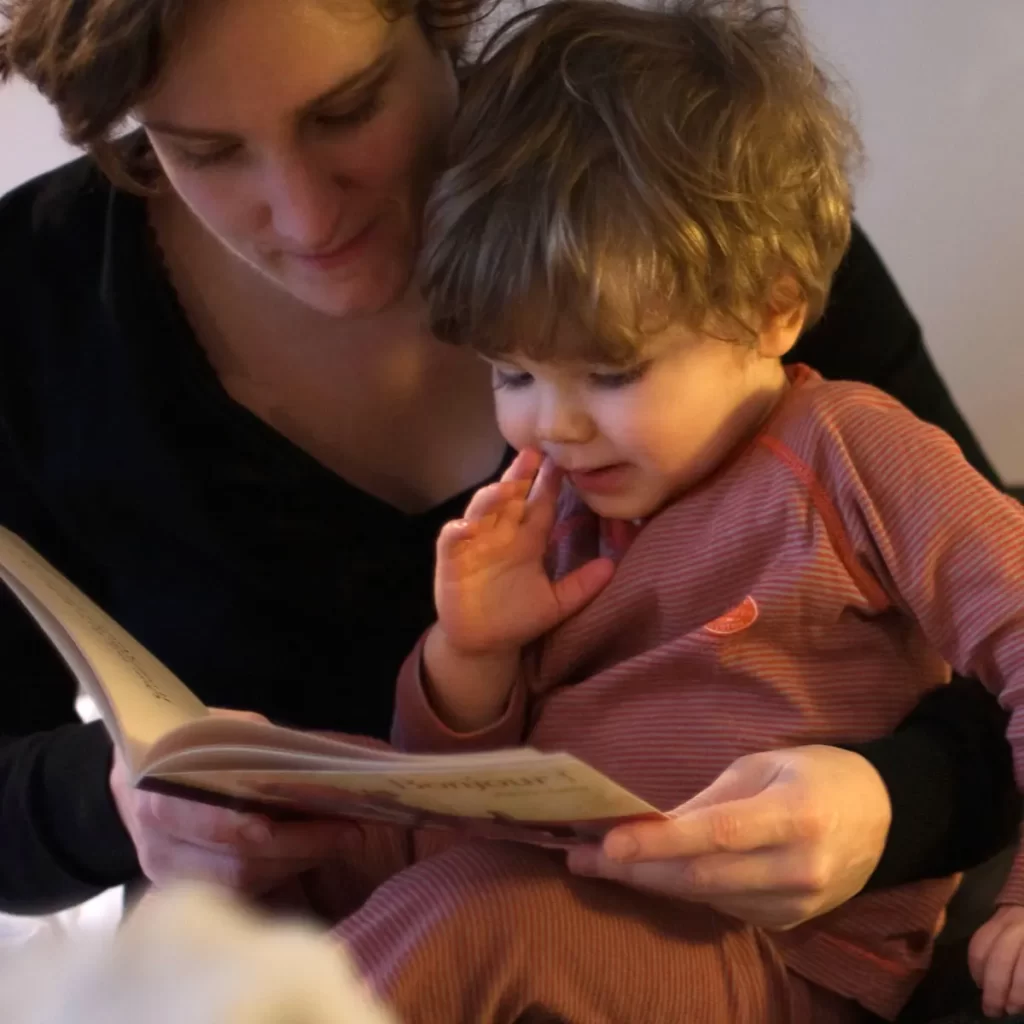
Is a wonderful way to bond, promote literacy, and foster a love of books. Here’s a step-by-step guide on how to read with your child effectively:
1. Start Early:
Begin reading with your child from a very young age, even before they can talk or understand the words. Babies love to hear the rhythm of your voice.
2. Choose Appropriate Material:
Select age-appropriate books that match your child’s developmental stage and interests. Board books with colorful pictures and simple words are excellent for infants and toddlers.
3. Create a Reading Routine:
Establish a daily reading routine. Reading before bedtime is a popular choice, but you can also read at other times during the day.
4. Choose a Cozy Reading Spot: Find a comfortable, quiet spot for reading. It could be a cozy chair, a corner of the room, or a reading nook. 5. Engage with Enthusiasm: Approach reading with enthusiasm and excitement. Your child will pick up on your love for books. 6. Ask Open-Ended Questions: While reading, ask open-ended questions about the story or pictures. Encourage your child to express their thoughts, predictions, and feelings. 7. Encourage Interaction: Allow your child to turn the pages, point to pictures, and even “read” the story in their way. Encourage their participation.
8. Use Animated Voices: Use different voices, tones, and expressions when reading dialogue or describing characters. This adds excitement to the story. 9. Relate to Real Life: Relate the story to your child’s experiences. Ask questions like, “Have you ever felt like the character in the book?” 10. Explore Different Genres: Introduce a variety of genres, including fiction, non-fiction, poetry, and picture books. This broadens their exposure to different types of writing.
11. Repeat Favorite Books: Don’t be afraid to read the same book multiple times if your child requests it. Repetition helps reinforce learning and boosts confidence. 12. Encourage Predictions: Ask your child to make predictions about what might happen next in the story based on the pictures or what they’ve read so far. 13. Be Patient: Let your child set the pace. Don’t rush through the book. Allow time for them to look at the pictures and absorb the story.
14. Celebrate Achievements: Celebrate your child’s reading achievements, whether it’s finishing a book, recognizing a word, or even making up their own stories. 15. Visit the Library: Make regular trips to the library to explore new books and encourage a love of libraries. 16. Create a Home Library: Build a collection of books at home, and make them easily accessible to your child. Having books readily available encourages reading.
17. Be a Reading Role Model: Let your child see you reading books, magazines, or newspapers. Children often mimic the behavior of their parents. 18. Don’t Pressure or Correct: Avoid pressuring your child to read quickly or correctly. If they make mistakes, gently correct them without making them feel self-conscious. 19. Transition to Independent Reading: As your child grows, transition from reading to them to reading with them. Gradually, let them take on more of the reading. 20. Encourage a Love for Books: Ultimately, the goal is to foster a lifelong love of books and reading. Make it an enjoyable and memorable experience.
Remember that
Reading with your child is not just about teaching them to read; it’s about nurturing a love for stories, developing language skills, and strengthening your parent-child bond. Enjoy the journey together, and treasure these moments spent with books.
Many parents ask themselves this question after an emotional moment: Why did I yell, even though I wanted to stay calm? The truth is, yelling is often not a conscious decision. It is a reaction that comes out faster than …
A child’s self-confidence is not built through words alone, nor does it grow from quick praise or motivational phrases. It develops through repeated daily experiences the child lives at home and at school. Every small success, every mistake met with …
Many parents find themselves confused when facing their child’s behavior. Is the child being stubborn? Spoiled? Or does the behavior truly require discipline? Sometimes, however, the issue is not the behavior itself, but the child’s self-confidence. The difference is subtle, …