• Home
  • About Us
    • About Us
    • Our Services
    • Our Team
    • Our Vision
    • Portfolio
  • Courses

    About Courses

    • Courses Archive
    • Also You Can Attend
    • Timetable
    • Become an Instructor
    • FAQs

    New Course

    How to do finger puppets

    How to do finger puppets

    500
    EGP
    Read More
  • Events
  • Blog
    • Child & Skills
      • Fear & Anxiety
      • Bad Habits
      • sleeping problems
      • School problems
      • Bladder & Bowels
      • Speech & Conversation
      • Behavior problems
      • Attention Difficulties
      • Eating & Weight
      • Unhappy Child
      • unacceptable behavior
      • Bullying
      • Psychiatric Diagnosis
      • Other Problems
      • Kids skills Steps: Getting Started
      • Kids skills Steps: Building skills
      • Kids skills Steps: making it fun
      • Kids skills Steps: reinforcing learned skills
      • True Story
    • Montessori in the Arab World
      • Montessori at home
      • Montessori at school
    • Life Skills
      • Social
        • The Volunteer’s Guide 1: The Essence of Volunteering
        • The Volunteer’s Guide 2: What makes volunteering unique 1
        • The Volunteer’s Guide 2: What makes volunteering unique 2
        • The Volunteer’s Guide 3: Types of volunteering
        • The Volunteer’s Guide 4: How to Get Started?
        • The Volunteer’s Guide 5: Choosing where to volunteer
        • The Volunteer’s Guide 6: Am i Being used?
        • The Volunteer’s Guide 7: what to expect?
        • The Volunteer’s Guide 8: What is expected of me?
        • The Volunteer’s Guide 9: what can i do in Love2Serve4All?
        • International Women’s Day: Empowering Girls Through Education:
        • Youth Empowerment: Fostering Leadership and Initiative
      • Mental
        • Reset
        • Holiday Stress: Your Guide to Managing and Enjoying the Season
        • A Year in Retrospect: Reflection on 2023
        • Navigating the Holidays with Grace: Setting Boundaries for a Joyful Season
        • Embracing Self-Love: A Valentine’s Day Guide
      • Skills
        • The year is ending? How to achieve my goals in the last 4 months
        • How to create a to do list
        • 101 Guide to Crafting a Personal Budget
        • A Vision for the Future: Setting Your Personal Goals for 2024
        • Achieving Your Dreams: A Step-by-Step Guide to Conquering Your Goals in 2024
        • The Power of Journaling: A Beginner’s Guide to Self-Discovery and Personal Growth
      • Health
        • Winter Wellness: Your Guide to Flu and Cold Prevention
    • Kids At Home
      • Movie Night Guide: The sorcerer’s Elephant
      • Reading with your child
      • Navigating Family and Social Gatherings with Kids: Tips to Overcome Challenges
      • Movie Night Guide: “The Christmas Carol”
      • Cooking with Kids: A Recipe for Fun in the Kitchen
      • Ringing in the New Year with Little Ones: A Guide to Celebrating New Year’s Eve with Your Child
      • Love for Learning: Valentine’s Day Special:
    • Kids At School
      • How to help a child develop independent study skills
      • Managing back-to-school anxiety
      • Setting up a back-to-school morning routine for your child
      • Social-Emotional Learning: Nurturing Emotional Intelligence in Students:
      • International Day of Happiness: Cultivating Positive Learning Environments:
  • Shop
    • Books
      • Children’s Books
      • For Children & Parents
      • Montessori Books
      • Parenting & Relationship
      • Self Help
      • Teens & Young Adults
      • Education & Reference
      • Montessori Education
        • Montessori Activities
        • Montessori Books
        • Montessori Materials
      • Educational Programs
      • Schools & Teaching
  • News
  • Features
    • Timetable
    • Gallery
    • Blogs’ Gallery
    • FAQs
    • MY ACCOUNT
  • Contact
  • Register Now
    • Registration
    • Login
Have any question?
(02) 0127 293 5708
info@love2serve4all.org
  • English
    • العربية
Love2Serve4All
  • Home
  • About Us
    • About Us
    • Our Services
    • Our Team
    • Our Vision
    • Portfolio
  • Courses

    About Courses

    • Courses Archive
    • Also You Can Attend
    • Timetable
    • Become an Instructor
    • FAQs

    New Course

    How to do finger puppets

    How to do finger puppets

    500
    EGP
    Read More
  • Events
  • Blog
    • Child & Skills
      • Fear & Anxiety
      • Bad Habits
      • sleeping problems
      • School problems
      • Bladder & Bowels
      • Speech & Conversation
      • Behavior problems
      • Attention Difficulties
      • Eating & Weight
      • Unhappy Child
      • unacceptable behavior
      • Bullying
      • Psychiatric Diagnosis
      • Other Problems
      • Kids skills Steps: Getting Started
      • Kids skills Steps: Building skills
      • Kids skills Steps: making it fun
      • Kids skills Steps: reinforcing learned skills
      • True Story
    • Montessori in the Arab World
      • Montessori at home
      • Montessori at school
    • Life Skills
      • Social
        • The Volunteer’s Guide 1: The Essence of Volunteering
        • The Volunteer’s Guide 2: What makes volunteering unique 1
        • The Volunteer’s Guide 2: What makes volunteering unique 2
        • The Volunteer’s Guide 3: Types of volunteering
        • The Volunteer’s Guide 4: How to Get Started?
        • The Volunteer’s Guide 5: Choosing where to volunteer
        • The Volunteer’s Guide 6: Am i Being used?
        • The Volunteer’s Guide 7: what to expect?
        • The Volunteer’s Guide 8: What is expected of me?
        • The Volunteer’s Guide 9: what can i do in Love2Serve4All?
        • International Women’s Day: Empowering Girls Through Education:
        • Youth Empowerment: Fostering Leadership and Initiative
      • Mental
        • Reset
        • Holiday Stress: Your Guide to Managing and Enjoying the Season
        • A Year in Retrospect: Reflection on 2023
        • Navigating the Holidays with Grace: Setting Boundaries for a Joyful Season
        • Embracing Self-Love: A Valentine’s Day Guide
      • Skills
        • The year is ending? How to achieve my goals in the last 4 months
        • How to create a to do list
        • 101 Guide to Crafting a Personal Budget
        • A Vision for the Future: Setting Your Personal Goals for 2024
        • Achieving Your Dreams: A Step-by-Step Guide to Conquering Your Goals in 2024
        • The Power of Journaling: A Beginner’s Guide to Self-Discovery and Personal Growth
      • Health
        • Winter Wellness: Your Guide to Flu and Cold Prevention
    • Kids At Home
      • Movie Night Guide: The sorcerer’s Elephant
      • Reading with your child
      • Navigating Family and Social Gatherings with Kids: Tips to Overcome Challenges
      • Movie Night Guide: “The Christmas Carol”
      • Cooking with Kids: A Recipe for Fun in the Kitchen
      • Ringing in the New Year with Little Ones: A Guide to Celebrating New Year’s Eve with Your Child
      • Love for Learning: Valentine’s Day Special:
    • Kids At School
      • How to help a child develop independent study skills
      • Managing back-to-school anxiety
      • Setting up a back-to-school morning routine for your child
      • Social-Emotional Learning: Nurturing Emotional Intelligence in Students:
      • International Day of Happiness: Cultivating Positive Learning Environments:
  • Shop
    • Books
      • Children’s Books
      • For Children & Parents
      • Montessori Books
      • Parenting & Relationship
      • Self Help
      • Teens & Young Adults
      • Education & Reference
      • Montessori Education
        • Montessori Activities
        • Montessori Books
        • Montessori Materials
      • Educational Programs
      • Schools & Teaching
  • News
  • Features
    • Timetable
    • Gallery
    • Blogs’ Gallery
    • FAQs
    • MY ACCOUNT
  • Contact
  • Register Now
    • Registration
    • Login

Child & Skills

Home » Blog » Clowning around in class

Clowning around in class
  • Posted by AreeJ
  • Categories Child & Skills, School problems
  • Date June 18, 2020
  • Comments 0 comment
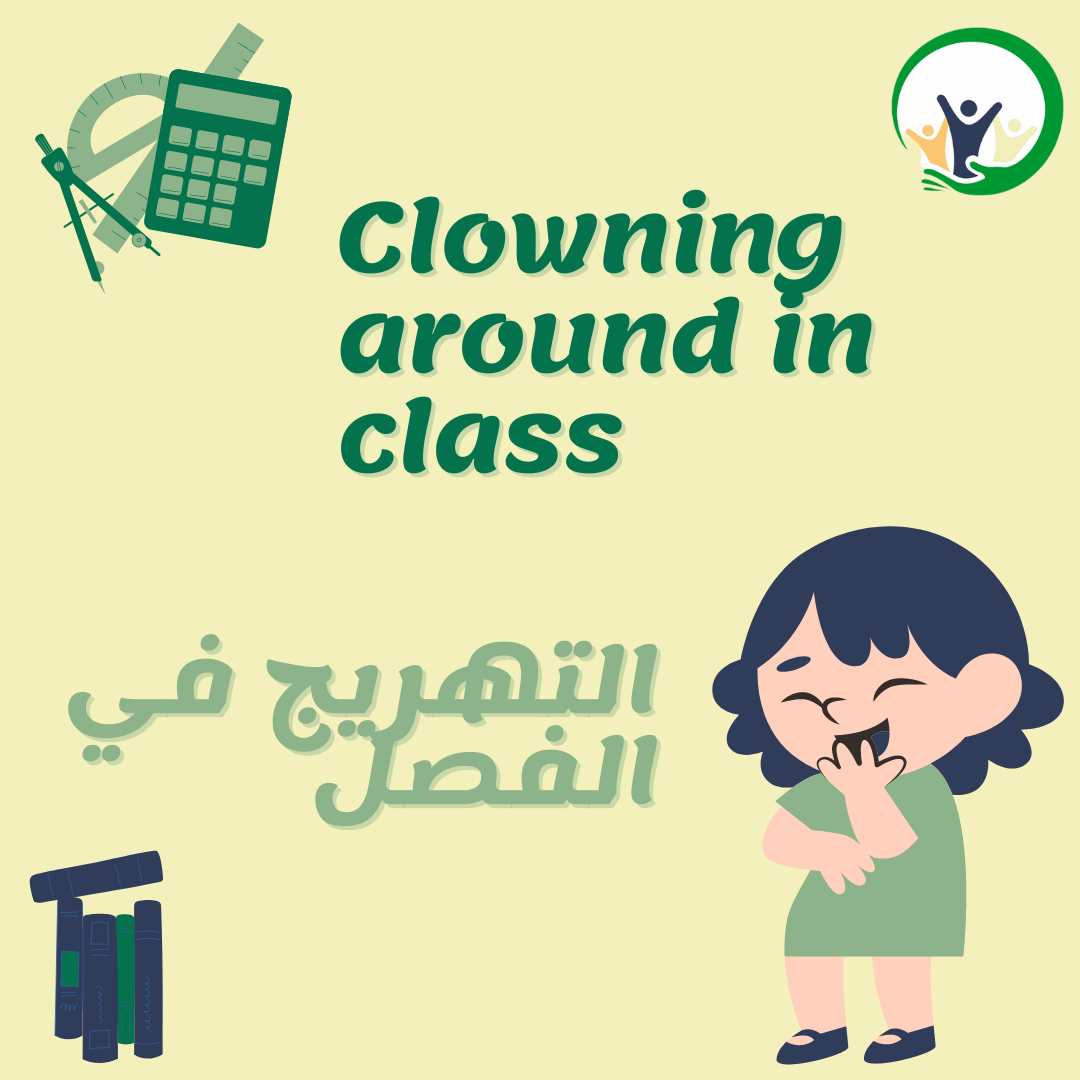
Clowning around in class

This behaviour describes children who have developed the habit of clowning around in class, disturbing their teacher and the other pupils by saying amusing things or acting in silly ways to provoke laughter and amusement. A common view of clowning is that it indicates a child’s desire for attention. If you view clowning in this way, you’ll probably try to solve the problem by telling them to stop, which on many occasions may not help and can even aggravate the problem. It’s possible, however, to view clowning in a very different way – not as attention-seeking behaviour but as the lack of an important skill that all good comedians have.

The skill of having correct timing

Rather than seeking attention, let’s assume that children who engage in clowning possess a genuine desire to appear funny in order to amuse others. If your child disturbs their class by clowning around, it’s reasonable to assume that there’s one important skill they haven’t yet learned: the skill of having correct timing. People who wish to amuse others have to learn how being really funny requires good timing – success depends on waiting for the correct moment to say amusing things or act in silly ways.

Let’s suppose you’re a teacher and you want to stop a child’s clowning around in your class. You could try praising them for having the ability to be funny and amusing. For example, you could say: “It wouldn’t surprise me if you make a career as a stand-up comedian when you grow up.” Starting off with praise makes them more prepared to listen when you tell them about the skill you want them to learn.

Explain that it’s a good time for them to start learning an important skill, a skill that all good comedians must have – the skill of good timing. In practice, this means that when amusing ideas come into a comedian’s head, they’re able to put the ideas on hold, memorise them, and then express them when the time is right. Many comedians carry notebooks for jotting down the funny ideas that pop into their minds, making them easier to remember and use later.

When children are learning new skills, it’s not uncommon for them to forget the skill they’re engaged in learning and start acting again in the old way.

Support

Working with your child, think about how they can learn the skill of having good timing. You could, for example, suggest they learn to jot down the funny ideas that occur to them during lessons so that they can remember them later. You might even offer them an opportunity to relate the amusing things they’ve come up with to an audience – which could be just you or perhaps you and their classmates – at the end of a lesson or the end of the school day.

When children are learning new skills, it’s not uncommon for them to forget the skill they’re engaged in learning and start acting again in the old way. In situations like this, their classmates can help by reminding them about the skill they are learning. Ask your child how, when this happens, they would like their classmates to remind them about the skill.

Synopsis

If you’re a teacher who wants to stop a child clowning around during lessons, you may be more successful if you refrain from criticising them or telling them to stop acting in a silly way.

Try praising them for their ability to be funny and amusing, then suggest they learn the skill of having better timing, of postponing the expression of amusing thoughts and ideas that may have popped into their mind. This skill involves both finding a method for memorising the amusing ideas and having an opportunity to express them to others at a later – and usually much better – time.

This article is owned by: Kids’Skills http://www.kidsskillsapp.com/

  • Share:
author avatar
AreeJ

Previous post

Disruptive Behaviour
June 18, 2020

Next post

Being Late
June 18, 2020

You may also like

How Do I Know If the Problem Is My Child’s Self-Confidence Rather Than Their Behavior?
22 February, 2026

Many parents find themselves confused when facing their child’s behavior. Is the child being stubborn? Spoiled? Or does the behavior truly require discipline? Sometimes, however, the issue is not the behavior itself, but the child’s self-confidence. The difference is subtle, …

A Child’s Self-Confidence: Its True Meaning and Why It Is the Foundation of Personality
22 February, 2026

A child’s self-confidence is not loud behavior, stubbornness, or the ability to speak boldly in front of others. Its true meaning is much deeper than that. Self-confidence is the inner feeling a child carries about their own worth and ability. …

Why Life Skills Awareness Matters in Childhood Education
14 October, 2025

When we think about education, it’s easy to picture classrooms, books, and report cards. But true education goes far beyond grades and test results. It’s about preparing children for life — equipping them with the emotional, social, and practical tools …

Leave A Reply Cancel reply

Your email address will not be published. Required fields are marked *

Search

Categories

  • Attention Difficulties
  • Bad Habits
  • Behavior problems
  • Bladder & Bowels
  • Blog
  • Bullying
  • Child & Skills
  • Child, Family, and school
  • Child’s Struggles
  • Dealing with emotions
  • Eating & Weight
  • education&community
  • Everyday life
  • Fear & Anxiety
  • Feelings & emotions for Child
  • For child
  • For Teen
  • Health
  • Health talk for Child
  • Healthy World
  • Home schooling
  • How to Start
  • Journey with the problem
  • Kids At Home
  • Kids At School
  • Kids skills Steps: Building skills
  • Kids skills Steps: Getting Started
  • Kids skills Steps: making it fun
  • Kids skills Steps: reinforcing learned skills
  • Life Skills
  • M.Montessori and philosophy
  • Me & My Child
  • Mental
  • Montessori in the Arab World
  • Olympiad
  • Other Problems
  • People and relationships for Child
  • Psychiatric Diagnosis
  • Relationships & Feelings
  • Relationships with parents
  • School life
  • School problems
  • Signs & meanings
  • Skills
  • sleeping problems
  • Social
  • Speech & Communication
  • Speech & Conversation
  • Sport
  • True Story
  • Types of Problems
  • unacceptable behavior
  • Uncategorized
  • Unhappy Child
  • What is Montessori method?
logo-eduma-the-best-lms-wordpress-theme

(02) 0127 293 5708

info@love2serve4all.org

Company

  • About Us
  • Meet our Team
  • Our Services
  • Become a Teacher
  • Contact

Products

  • Courses
  • Shop Page
  • Events
  • Gallery
  • Blogs’ Gallery
  • Membership

Terms

  • Terms of Service
  • Privacy Policy
  • Shipping and Return
  • Jobs and Internships
  • Sitemap

Recommend

  • Sleep Well
  • Apologizing
  • Divorce
  • Bedwetting
  • Being Late

Education Web Site by love2serve4all Powered by love2serve4all.

  • Terms of Service
  • Privacy Policy
  • Shipping and Return
  • Jobs and Internships
  • Sitemap