The Mystery of the “Spiritual Embryo”: Why Are Humans Born the Weakest Creatures, and How Does This “Instinct” Build Their Genius?
- Posted by Marketing L2S
- Categories montessori books
- Date April 7, 2026
- Comments 0 comment
Have you ever reflected on this striking contradiction at the beginning of life? A calf stands and walks within hours of birth, and a bird flies within days, while a human infant remains “helpless,” unable even to hold up their head for months.
When we observe a newborn from a deep psychological and educational perspective, we realize that this “weakness” is not a biological نقص, but rather the very secret of human genius. In her timeless book “The Secret of Childhood” (published by Dar Al-Kalima), Maria Montessori reveals a revolutionary concept that explains this mystery: the human being is not born complete because they need a space of “freedom” to build themselves.
The First Secret: Why Do We Walk Late So We Can Think Ahead?
There is a fundamental difference between animals and humans. Animals are born with a “ready-made program” or fixed instincts that guide them like pre-programmed machines to perform vital tasks.
Humans, however, are distinguished by what Montessori calls the “period of spiritual incubation.”
A child is born physically incomplete so that they have the full opportunity to build themselves psychologically and mentally, in complete freedom, away from rigid instinctual patterns. This is the essence of the concept of the “Spiritual Embryo.” While the body is formed in the mother’s womb, personality and intelligence truly begin to take shape after birth as an independent entity that needs its own time.
“Other creatures are born with a fixed instinctive program, while the human alone has the privilege of building themselves from scratch—to be the master of their decisions, not a slave to their instincts.”
The “Social Womb”: When Love Becomes the Placenta of Your Child’s Soul
Once the child enters the world, they do not move into emptiness; they transition from the physical womb to what can be called the “social womb.” The surrounding environment—home, family, emotional atmosphere—is not just a physical setting, but a “spiritual placenta” that nourishes the child’s inner world and provides the security needed for growth.
Observing traditional practices, we find serious mistakes committed against this spiritual embryo. The newborn is often treated as if they were an unfeeling object—wrapped tightly in restrictive clothing that limits movement, exposed to harsh lights and loud noise. Science confirms that calmness, tranquility, and love are not luxuries in upbringing; they are essential spiritual nourishment, just as vital as milk for this small being growing in its new womb.
The “Nebula” of Inner Construction: Stop Filling Your Child’s Mind and Let the Miracle Work
Once we provide the child with a safe “social womb,” their inner power begins to operate. Every child carries within them a “hidden construction plan,” scientifically referred to as “Nebulae.”
This is not merely a readiness to learn; it is a latent creative energy and a vital force that guides the child to explore the world and shape their unique personality before it fully emerges.
Here comes the radical shift in the role of parents and educators: we are not the “makers” of the child’s personality—we are servants of this miracle.
- Your role is to provide a stimulating environment that serves the child’s inner plan, not to “inject” intelligence into them.
- Excessive intervention, forcing information, or shaping the child into predefined molds disrupts the brilliant inner design already within them.
A Call for Reflection: Are You Giving Your Child the Chance to Be “Human”?
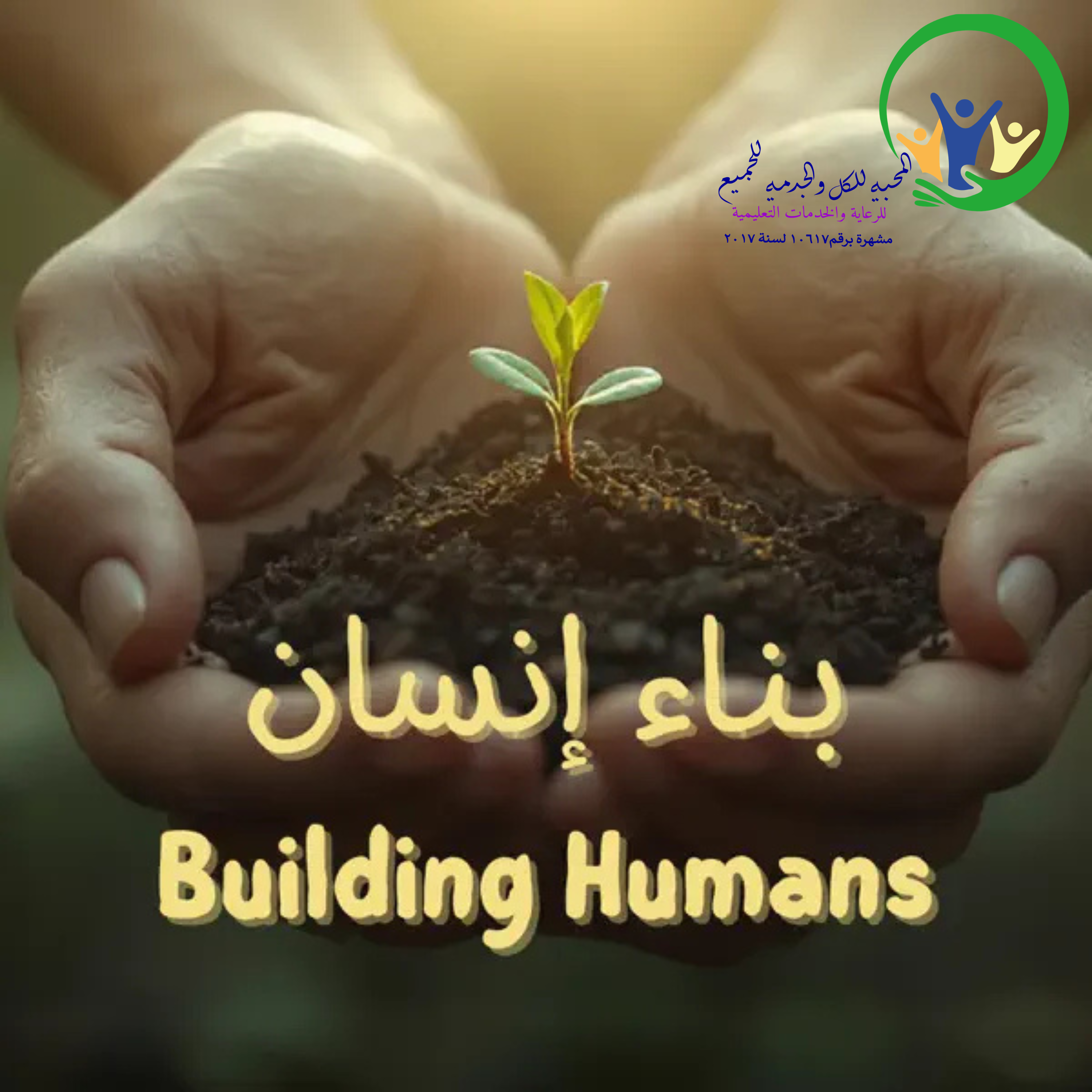
Our journey in “Building a Human” is grounded in a deep philosophy we believe in: that dealing with a child begins with respecting their “spiritual embryo.”
When we realize that behind this small, fragile body lies the immense power of the “nebula,” our perception of every cry, every movement, and every attempt to explore will change.
In closing, we leave you with this question drawn from your daily life:
When was the last time you watched your child trying to explore something, and consciously chose to step back and not intervene, so as not to disrupt a natural moment of inner construction?
Our journey into understanding the secrets of the human mind continues. In our next article, we will explore the concept of “sensitive periods”—those magical windows of time when a child’s mind opens briefly to learn a specific skill. If they close, they may never reopen with the same intensity.

Previous post